How to recycle coffee grounds in business ? Your guide to zero waste
Coffee is essential in companies, but behind every espresso consumed, mountains of waste are generated. France, for example, produces 160,000 tonnes of coffee grounds each year. Considered a biowaste, it releases methane when it decomposes in the open air.
You think that coffee grounds are nothing more than waste ? Think again—it is a valuable resource for the circular economy and for your CSR initiatives. Are you looking for concrete ideas on how to make the most of this material with its amazing properties? In this guide, you will discover its many uses and how Pleyce’s solution makes it easy for you to recycle it.
This subject interests you but you dont have the time to read right now ?
Download the practical guide and read it later !
Coffee grounds : an unsuspecting resource
For a long time, coffee grounds ended up in the trash. Yet today, they are recognized as a resource-rich material:
| Ingredient | Content |
| Nitrogen | 2,4 to 15,5 % |
| Phosphorus | ~0,15 % |
| Potassium | ~0,35 % |
| Other minerals | Calcium, magnesium, iron, copper, zinc |
| Carbohydrates | Around 70–75 % |
| Proteins | 11,2 to 17,4 % |
| Fats | 10,5 to 15,9 % |
| Cafeine | Up to 0,5 % |
| Polyphenols | Present, antioxidant properties |
Some researchers consider this nutrient concentrate a chemical gold mine. Far from being a trivial waste product, it enables a wide range of applications (agriculture, cosmetics, energy).
Why recycle business coffee grounds ? The challenges and benefits
Now you know : coffee grounds are a treasure trove of natural chemistry ! So it would be a shame to throw it in the bin. Especially when you consider the impact of this organic waste on the environment when it ends up in a landfill. It pollutes the Earth by emitting methane, a greenhouse gas whose effect is 28 times greater than that of CO₂. However, by recycling it, we can turn it into a resource, contribute to the circular economy, and reduce waste at the same time.
In fact, this last point has been mandatory since January 1, 2024. Under the AGEC law, professionals are required to sort organic waste at the source. Companies must now implement solutions to recycle these wastes to avoid financial and administrative penalties.
That’s not all. Recycling coffee grounds offers many benefits for your business :
- You strengthen your image and demonstrate your commitment through concrete actions to protect the environment.
- The less waste you generate, the more you reduce management costs.
- Teams become aware of sustainable development and are united around a meaningful common project.
In short, repurposing coffee grounds is an environmentally responsible approach that benefits both the planet and your teams.
How to recycle used coffee grounds ? Discover the multiple uses of a precious waste product
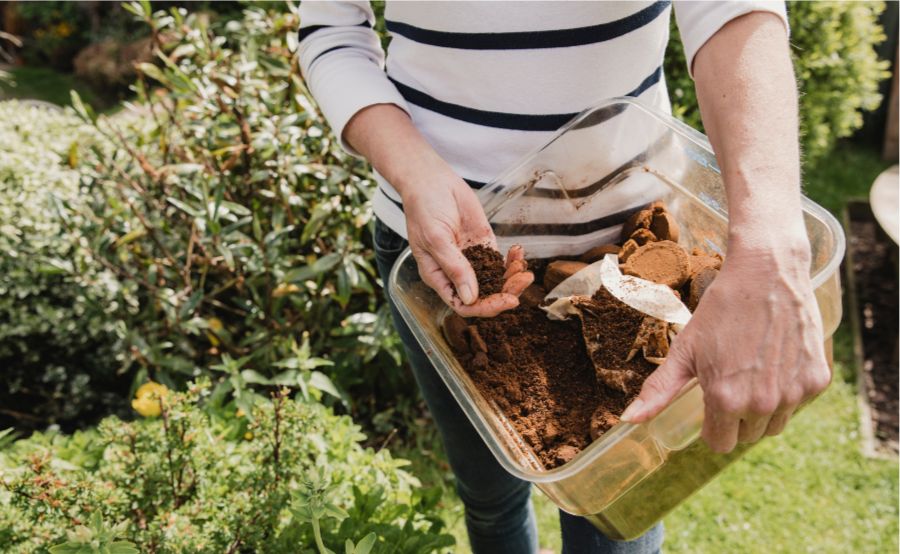
Have you ever wondered what you can do with coffee grounds? Here are some practical ideas for using this material :
As compost and natural fertilizer
- How : Sprinkle coffee grounds at the base of plants that appreciate its acidity (hydrangeas, roses, tomatoes, zucchini).
- Benefit : enriches the soil with nitrogen, potassium, phosphorus and helps repel certain pests (for example snails and rodents).
Ecological cleaning product
- How : Applied on a sponge, in a sink, or in a container in the refrigerator.
- Benefit : Degreaser and deodorizer.
Cosmetics
- How : mixed with honey or oil to create a paste.
- Intérêt : exfoliant rich in antioxidants, its a super gift idea for your internal events.
Mushroom culture
- How : substrate for oyster mushrooms, used by initiatives like our partner Les Alchimistes.
- Benefit : locally produced sustainable food.
Green energy
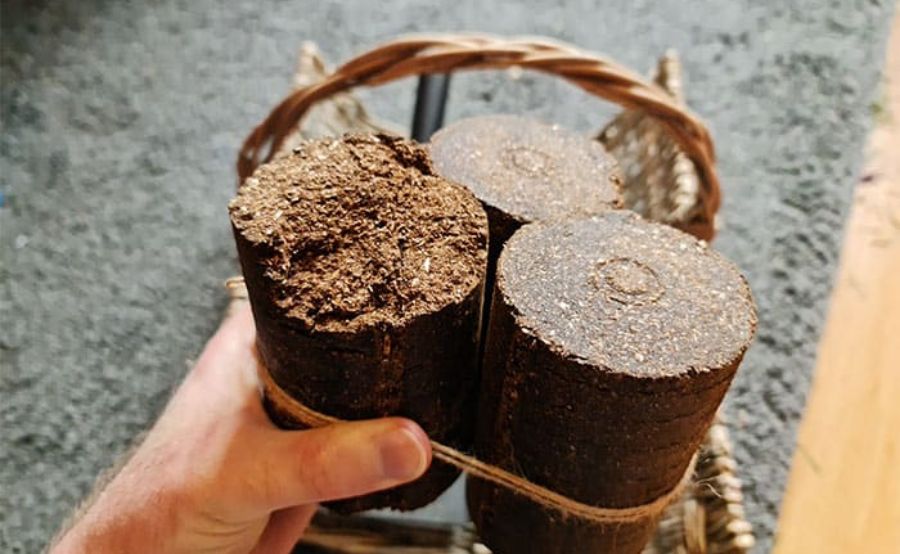
- How : transform the coffee grounds into heating pellets like Phytorestore.
- Benefit : an effective solution to generating local energy sources, using a waste product.
How can coffee grounds be recycled in the office ?
Now you understand the importance of repurposing coffee grounds. But even with the best intentions, implementing it can be tricky if you don’t make it easy for your teams. After all, the success of this initiative depends on collective buy-in.
In practice, you could organize awareness workshops on organic waste sorting. Then, to help teams adopt the right habits, create educational materials to display near the coffee machines. Challenges are motivating—so why not organize an internal contest around the amount of coffee grounds collected, with rewards for the winners?
To make the process easier, be sure to set up dedicated collection points :
- Suitable airtight bins.
- Clear signage : « coffee grounds only ».
- Visual instructions to prevent mistakes.
Now, and this is the most important part, you need to choose a valorization solution. If your company has a garden, it’s an excellent way to recycle coffee grounds. Another option: many local initiatives are popping up today—associations or urban farms, for example, that are happy to collect organic waste and turn it into resources or food. As you’ll see a little later, at Pleyce we help you valorize your coffee grounds through our specialized collection service.
Of course, to highlight all your efforts, you’ll need to track the quantities collected and report the results when you submit your annual CSR report. Internally, this will also help motivate teams to maintain the initiative over the long term.
The Pleyce solution for transforming your biowaste into resources
At first glance, recycling coffee grounds may seem intimidating. Good news! We make the process simple thanks to our service.
So, how does it work in practice? When the technician comes to refill or maintain your coffee machine, they collect the coffee grounds on-site at no extra cost, as the collection is included in our coffee service.
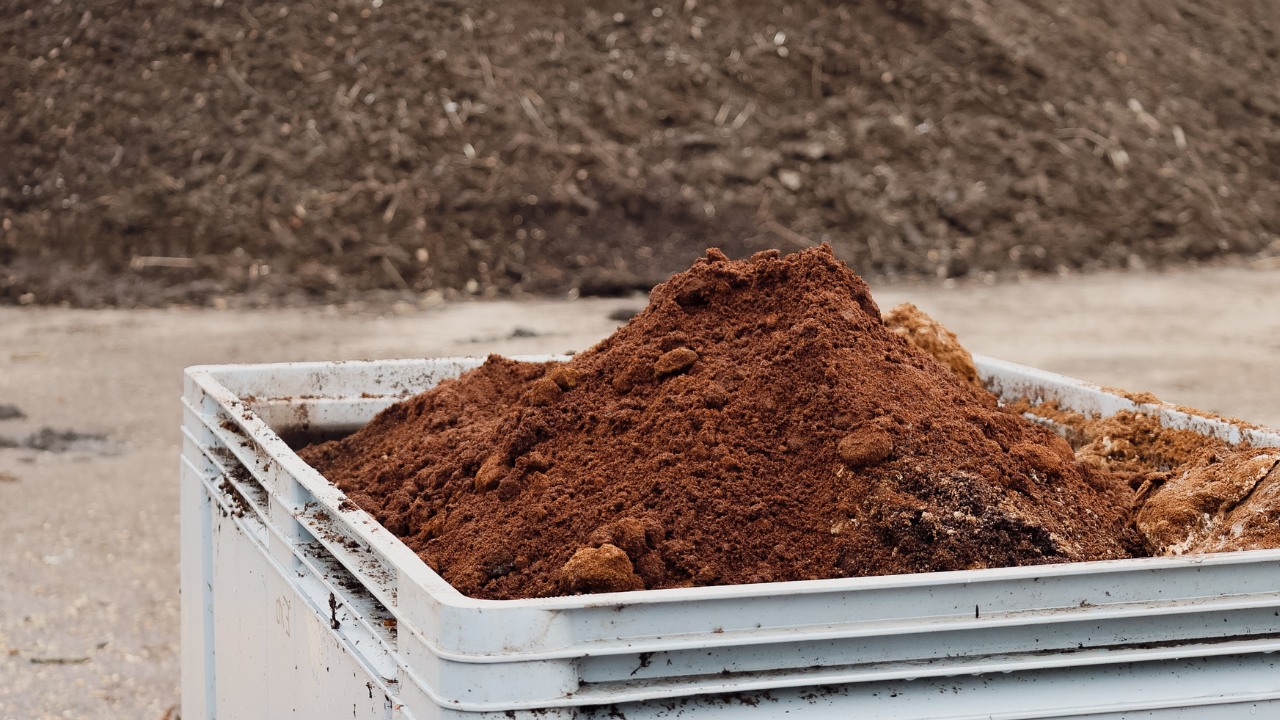
We work with specialized partners, such as Les Alchimistes, who collect, dry, and transform this organic waste into compost to fertilize soils and green urban spaces.
The 5 steps to recycling used coffee grounds with Pleyce
1. It all starts with a cup of coffee…
Coffee grounds should not be confused with ground coffee. More precisely, they are the residue left after brewing the beverage from the coffee machine.
This residue is organic waste. Individuals can dispose of it in their compost bin. However, given the larger volumes of coffee grounds generated in a company, there are more possibilities… and we want to explore them with you!
2. Collection of coffee grounds in a business
All Pleyce coffee machines are equipped with a grounds container that should be emptied regularly. To make emptying and collection easier, don’t hesitate to request a collection before our technician’s next visit to your premises.
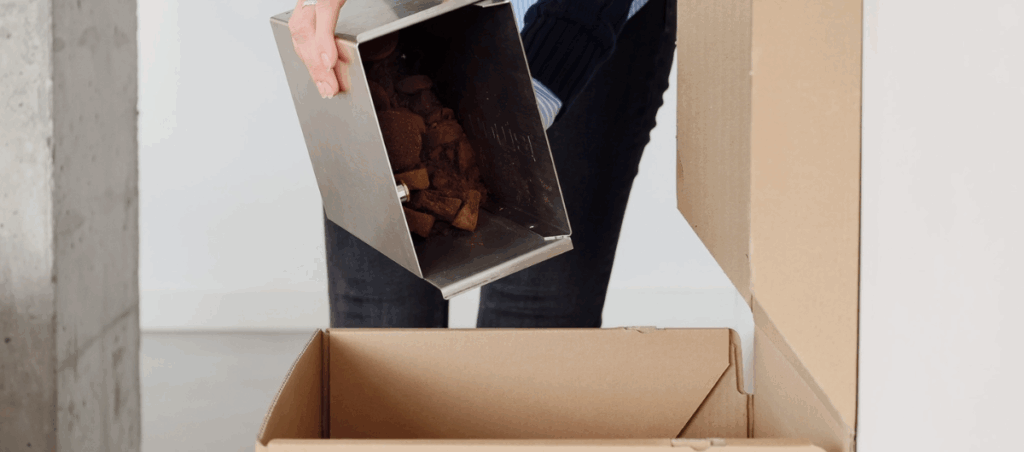
3. Collection by our technician during the maintenance visit
The coffee grounds to be recycled are then collected by the technician during the maintenance visit. This way, we take care of this organic waste for you while making you an active participant in its valorization.
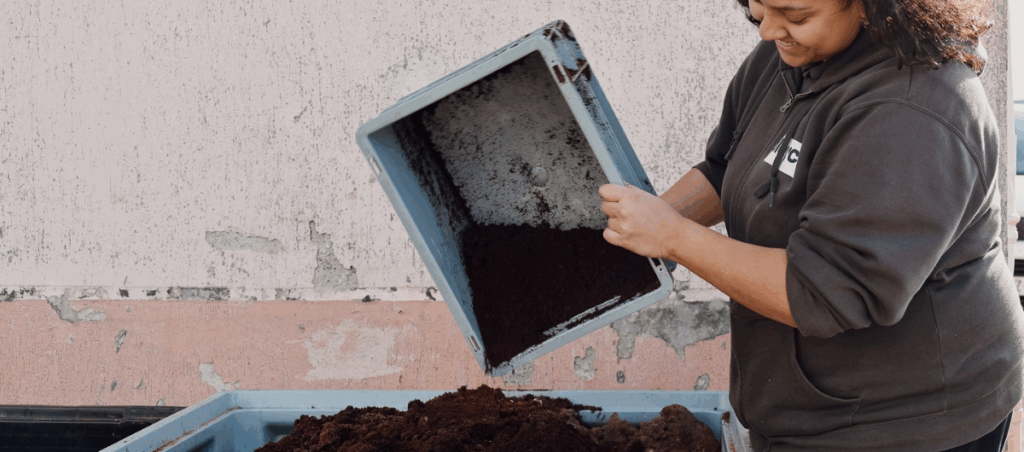
4. Transport to the valorization center for weighing and drying.
Before being handed over to recycling experts, the coffee grounds pass through our valorization center. There, they are weighed and dried to provide a product ready to be used by our partners.
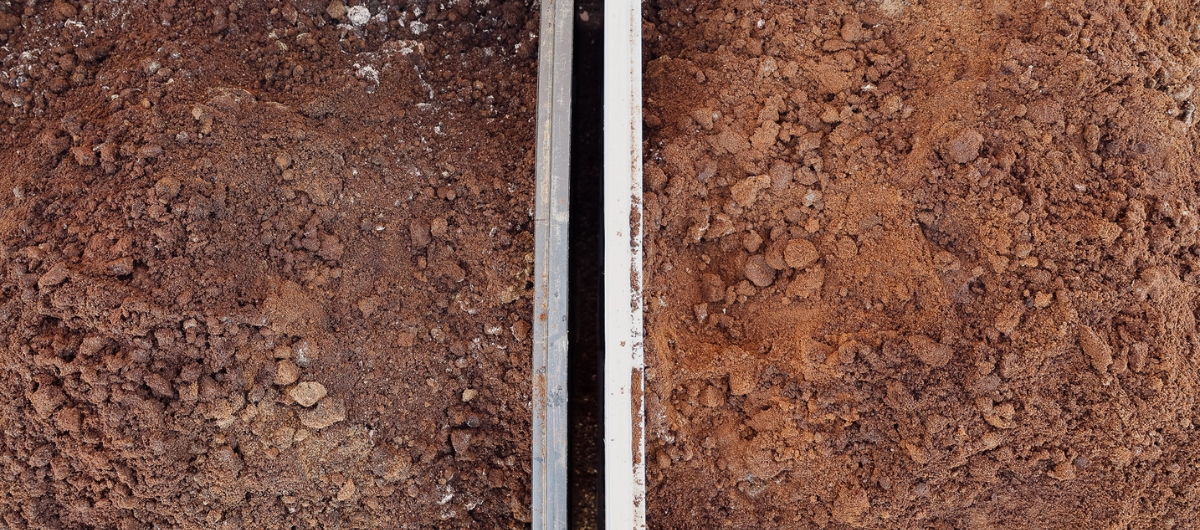
5. Transformation by our partners
Finally, the coffee grounds from your company’s coffee machines are entrusted to our expert partners. They are then properly processed and recycled using innovative methods that benefit the environment.
Ultimately, you enjoy all of these benefits:
- Simplicity : we collect the coffee grounds on every visit to your company.
- Reliability : regular collection in compliance with standards.
- Positive impact : you participate in the circular economy and the preservation of the environment.
How Lucca recycles 175 kilos of coffee grounds per year with Pleyce
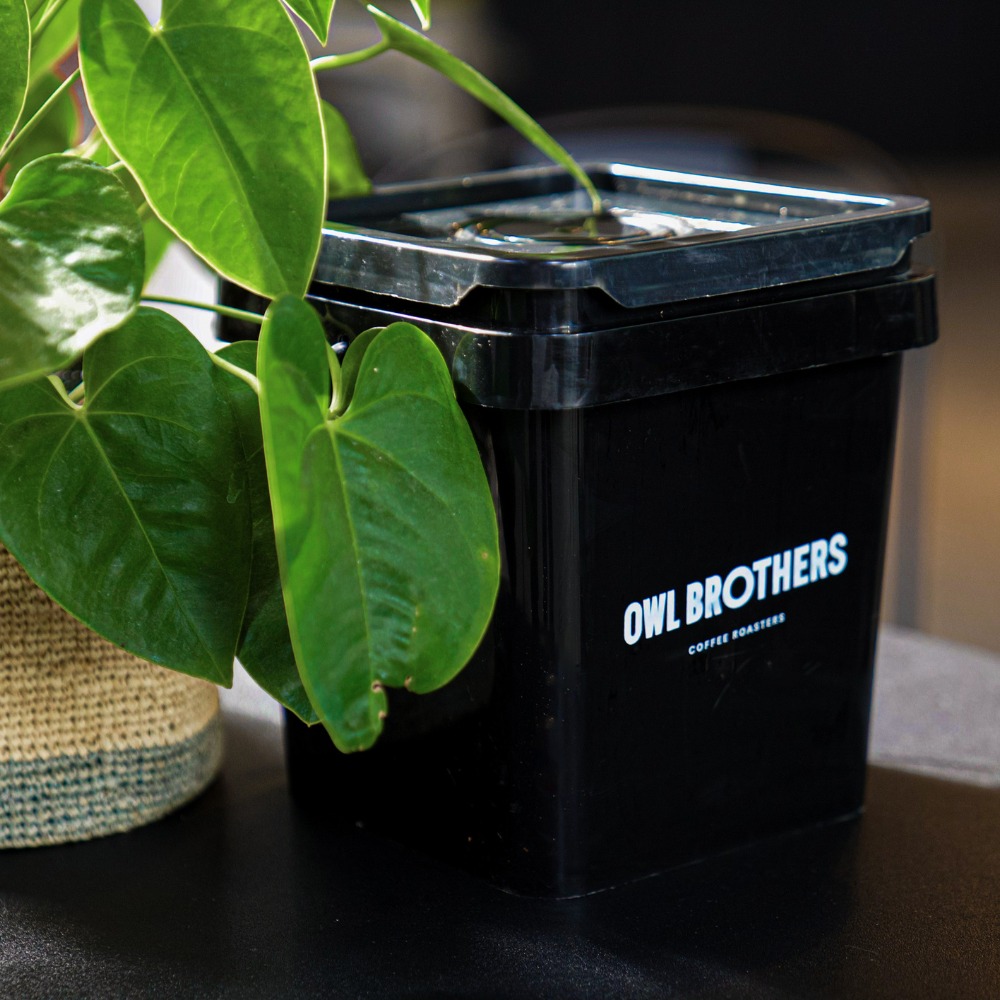
Lucca develops human resources management solutions. In this company, environmental responsibility is a core value, as emphasized by Lucie Espinasse, Office Manager:
“Some people at Lucca are particularly committed to environmental issues. That’s why we’ve implemented several initiatives that meet their expectations for sustainability while also enhancing their well-being.”
The collection of coffee grounds is one of the initiatives implemented by the Lucca team at their Marseille offices. This allows them to recycle 175 kilograms of coffee grounds per year—the equivalent of 28,000 capsules that won’t end up in the trash.
And if your coffee-break becomes sustainable ?
Coffee brings teams together, and recycling its grounds is a genuinely eco-friendly gesture. By recycling this valuable resource, you take action for the environment, comply with the AGEC law, enhance your brand image, and even reduce costs.
With Pleyce, you benefit from a simple, turnkey, zero-waste solution.
Ready to turn your waste into resources?
Request your coffee grounds recycling solution with Pleyce today:
Is the coffee grounds collection free with Pleyce ?
Yes, the collection of coffee grounds is a free service proposed by Pleyce within the framework of our company coffee offers.
Is it really possible to recycle coffee grounds ?
Yes, very rich in organic material, nitrogen and phosphorus, it is a valuable resource for composting, agriculture, and energy production.
Are coffee grounds considered organic waste under the AGEC law?
Yes, coffee grounds are classified as organic waste, and their separate collection has been mandatory for companies generating significant quantities since January 1, 2024 (AGEC Law).
How does Pleyce manage the collection of coffee grounds ?
Pleyce offers a free, regular coffee grounds collection service directly at your premises as part of our office coffee machine solutions.
What are the coffee grounds used for once collected by Pleyce ?
Our specialized partners (such as Les Alchimistes) transform the coffee grounds into compost, biofuel, or a substrate for mushroom cultivation.
Is there an additional cost for coffee grounds recycling with Pleyce ?
No, the collection and valorization of coffee grounds are included in our services, as part of a zero-waste and circular economy approach.
Can my company recycle its coffee grounds without using a specialized service ?
Yes, you can use it as fertilizer for indoor plants or as a deodorizer, but for large volumes and professional valorization, a collection service is recommended.
Do coffee grounds need to be dried before being stored for recycling ?
Ideally, yes, to prevent mold. However, professional collection services like Pleyce handle the storage and transport conditions to ensure optimal recycling. Our containers are specially designed for this purpose.
Does recycling coffee grounds really reduce our waste management costs ?
By reducing the volume of your residual waste and helping ensure compliance with organic waste regulations, recycling coffee grounds can lead to significant savings on waste management fees and potential penalties.