



The guide to choosing the perfect water dispenser
One in two employees drinks bottled water at the office. Access to drinking water is still too often at the employee’s expense and at the cost of the environment.
Moreover, when drinking water is not easily accessible, some employees do not drink enough throughout the day, which can negatively impact their well-being and health. Dehydration can lead to serious issues such as fatigue, dizziness and headaches.
For the health of your employees—and that of the planet—you are considering equipping your premises with a professional water dispenser. That’s a great step. But how do you choose the right water dispenser for your business?
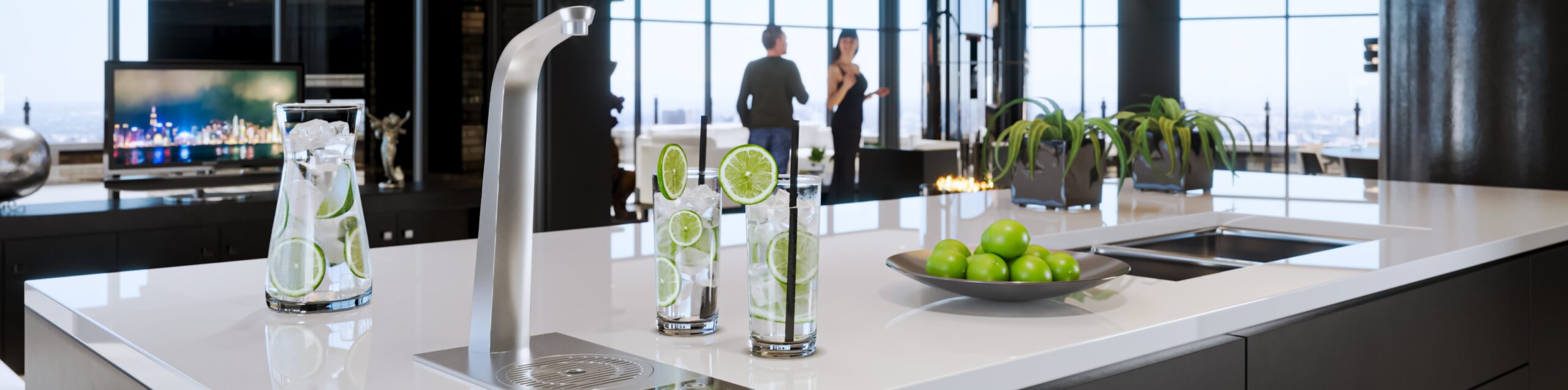
Explore our ultimate guide to professional water dispensers.
1. How to choose the right professional water dispenser
There is a wide range of professional water dispensers available on the market. But which one is best suited to your business and your specific needs?
To choose the right water dispenser, you should first define your requirements: the location of the unit, the number of users, dispensing capacity, the type of water offered (hot, chilled, sparkling), and your goal to reduce your carbon footprint.
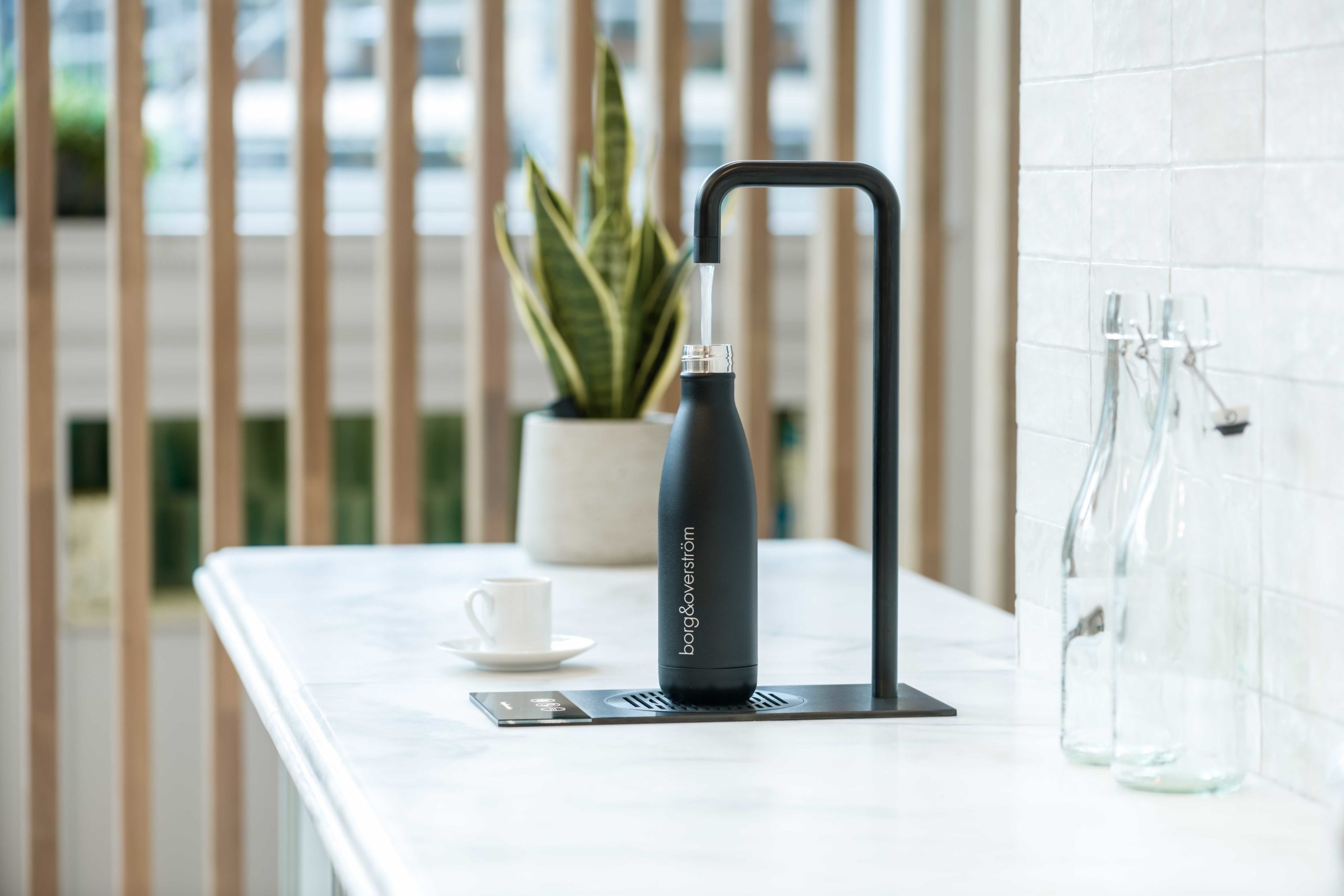
1.1. Choosing the right type of professional water dispenser
Choosing the right water dispenser starts with understanding your needs, with the aim of encouraging employees to stay properly hydrated.
Location
The water dispenser should be placed in a strategic location:
- To encourage employees to use it, place the water dispenser in freely accessible, high-traffic areas such as open-plan offices, break rooms or corridors, or in spaces where drinks are usually available, such as cafeterias, canteens or tea points.
- If clients or visitors are likely to access your premises, choose a location they frequent, such as meeting rooms or the reception area.
- The choice of water dispenser model may also depend on the availability of an electrical outlet and, where applicable, a connection to the mains water supply.
Flow rate
Water dispenser usage varies depending on its location within the company. To choose the most suitable model, here are the key questions to consider:
- How much water is required for all employees?
- What flow rate is needed based on the expected users?
- What flow rate is appropriate for an office versus a dining area?
A dispenser installed in a dining area is typically used more intensively, but over shorter periods, than a water dispenser placed in an open-plan office, for example.
Choosing the right type of water dispenser
Defining the required flow rate will help you refine your choice, whether you opt for a freestanding, built-in or countertop water dispenser.
- Freestanding water dispensers: these are pedestal-mounted units that can be installed anywhere in your company, close to an electrical outlet. They are ideal for break rooms. Elegant, refined and design-led thanks to their clean lines, these dispensers optimise space without unnecessary bulk.
- Countertop water dispensers: also known as table-top or non-pedestal units, countertop dispensers are designed to be placed on a counter or on a kitchen surface, such as in your company’s tea point or kitchenette. They require a work surface with sufficient space to ensure comfortable and uncluttered use.
- Built-in water dispensers: solid and robust, these integrated units free up maximum floor space, making them ideal for small areas or spaces that need to remain open and uncluttered. They integrate seamlessly into your furniture, from the simplest to the most design-led settings.
A few examples:
- Company restaurant with a two-hour lunch service: opt for a freestanding water dispenser with a high cooling capacity (at least 45 litres per hour).
- An office, meeting room or waiting area with all-day access: choose a built-in office water dispenser with a tank to maximise space (20 to 40 litres per hour).
- A break room used by employees throughout the day: opt for a freestanding water dispenser that encourages interaction and conversation among teams (20 to 40 litres per hour).
Type of water offered: chilled, ambient, hot or sparkling?
While providing chilled water is essential, it may also be worth adding a sparkling water option. Although not strictly necessary, it is often perceived as a real benefit by employees and/or clients. To dispense sparkling water, simply choose a water dispenser equipped with a CO₂ cartridge.
You may also want to offer hot water, particularly for tea lovers.
Environmental impact
Providing employees with a water dispenser helps reduce the need to purchase bottled water to stay hydrated. To go even further in your CSR approach, we recommend choosing a mains-connected filtered water dispenser rather than a bottle-fed model, significantly reducing plastic waste.
1.2. Choosing between a mains-connected and bottle-fed water dispenser
A bottle-fed water dispenser operates using water bottles as refills. It has two major drawbacks:
Health risk: water can stagnate in bottle-fed dispensers, requiring daily disinfection procedures to maintain water quality and prevent any risk of contamination.
Environmental impact: bottles are made of plastic and require transportation for delivery and collection once empty, increasing their environmental footprint.
A mains-connected water dispenser provides unlimited filtered tap water, ensuring clean and safe drinking water. It offers four key advantages:
Clean, safe drinking water: mains-connected water dispensers are equipped with filtration systems for tap water. As a result, the water delivered is free from microbiological pollutants and chlorine. This system meets legal drinking water requirements far more effectively than tap water alone or bottle-fed dispensers.
Chilled water: a mains-connected water dispenser also delivers chilled water, typically at a temperature between 9°C and 12°C, in line with legal requirements.
Natural filtration system: to go one step further, choose a natural filtration system, such as coconut shell carbon. This natural activated carbon filter removes undissolved suspended particles as well as unwanted tastes and odours, delivering crystal-clear water.
Improved environmental impact: a mains-connected water dispenser eliminates the need for plastic bottles and polluting transport. This solution reduces carbon footprint by approximately 72% compared to bottle-fed water dispensers.
You can go even further in this environmental approach by:
- Choosing reusable cups instead of disposable ones;
- Encouraging employees to use sustainable items such as reusable bottles and glasses.
2. What service options are available for your professional water dispenser?
You’ve chosen a mains-connected filtered water dispenser, but are still deciding between purchase and rental. What are the benefits of each option?
2.1. Buy or rent your water dispenser: which option is right for you?
Each option has its advantages and disadvantages. Your choice will depend on your specific situation, including your budget, your level of autonomy in managing the water dispenser, and the type of unit you require.
Purchasing a professional water dispenser
Buying a professional water dispenser is generally the most cost-effective solution, as the investment is often recouped relatively quickly. However, maintenance and servicing remain your responsibility.
Even if you take out an on-demand maintenance contract, it may not include the replacement of defective parts. Finally, end-of-life equipment management is also your responsibility.
Learn more about our purchase offer
Renting a professional water dispenser
Renting a professional water dispenser is a more accessible solution than purchasing. It offers a flexible, tailored approach that can evolve according to your needs.
In addition, there are no maintenance constraints on your side, as your provider takes care of everything. Make hydration simple and seamless for your teams and visitors.
Learn more about our rental offer
3. Installing and maintaining your mains-connected professional water dispenser
Have you chosen a mains-connected filtered water dispenser perfectly suited to the needs of your teams, clients and visitors? Excellent. The next step is to install and maintain it properly to ensure it lasts as long as possible.
3.1. Where should you install a professional water dispenser?
Before installing your water dispenser, it is essential to carefully choose its location to ensure optimal performance and long-term durability. Allow sufficient space around the unit and select a well-ventilated area to facilitate airflow. Make sure key technical requirements are met, such as having a nearby electrical outlet and access to a mains drinking water supply. It may also be beneficial to have a wastewater drain connection, rather than manually emptying the drip tray or collection tank.
Consider installing a support cabinet if the dispenser does not have an integrated base. It can also be useful to have nearby:
- a sink or dishwasher, for cleaning reusable containers;
- a recycling bin, if disposable cups are provided;
- storage space for reusable bottles, glasses and carafes;
- and why not a coffee machine, the perfect complement to offer a wide range of beverages.
Recommended locations depending on your needs:
- Break room, tea point or cafeteria: ideal for relaxed use.
- Meeting room or reception area: demonstrates attention to hospitality and well-being.
- Open-plan office: encourages regular hydration throughout the day.
- High-traffic areas: convenient for quick and easy access.
3.2. How to install a professional mains-connected filtered water dispenser
Step 1
Check the location of electrical outlets before choosing where to install your unit: a power socket must be located within 1.5 metres of your mains-connected water dispenser.
Step 2
Ensure that a mains drinking water supply is accessible within your premises. Your water dispenser provider will carry out an on-site assessment to confirm that your facilities are supplied with potable running water. If the water supply is located far from the dispenser, a flexible supply tube with a 6-millimetre diameter (approximately the size of a ballpoint pen) can be installed to bring the water to the unit.
Step 3
Connect the water supply to the dispenser: this involves installing a T-connector on the pipework to divert water to your unit. This type of fitting allows two or more pipes to be connected together.
Step 4
Check the water pressure: if it is too high, a pressure regulator may need to be installed to bring it within the recommended limits.
Step 5
System safety: this involves installing a water block, a mandatory safety device that automatically shuts off the water supply to the dispenser in the event of a leak. In addition, if not already in place, an emergency shut-off valve is installed on the pipework to protect electrical circuits in case of leakage.
Step 6
Connecting the water dispenser: once the unit has been installed, simply plug it into the electrical outlet. Then run the water to flush the system before switching it on. After completing the necessary checks to ensure the dispenser is operating correctly, it is ready for use.
3.3. How to clean and maintain a professional mains-connected filtered water dispenser
Are you planning to install, or have you recently acquired, a professional mains-connected filtered water dispenser for your business? A number of routine operations, from regular cleaning to more technical tasks such as descaling, must be carried out on a regular basis.
Below is a list of the main tasks required to maintain your mains-connected water dispenser and ensure its long service life:
- Routine maintenance tasks: empty and clean the drip tray if your dispenser is not connected to a wastewater drain; regularly wash reusable containers; clean external surfaces; wipe down selection buttons and the cup holder; disinfect the dispensing nozzle; remove dust from ventilation grilles, and more.
- Regular checks to be carried out: to prevent any risk of water leakage or contamination, ensure that safety components such as the water block and pressure regulator are functioning properly; monitor the water temperature; inspect hydraulic and electrical circuits, and more.
- Boiler draining for hot water units: the boiler should be drained once a year.
- Replacement of the filter cartridge: mains-connected water dispensers are equipped with a filter that must be replaced every six to twelve months, in accordance with AFIFAE recommendations.
- Descaling the water dispenser: descaling should be carried out approximately twice a year. Limescale buildup is a significant cause of malfunction in mains-connected water dispensers.
- Replacement of the CO₂ cartridge for sparkling water units: the gas cartridge must be replaced once it is empty. You can monitor the gas pressure yourself using the pressure gauge, typically located behind or underneath the unit.